A journey through an India not seen, but heard — music as the way inward.
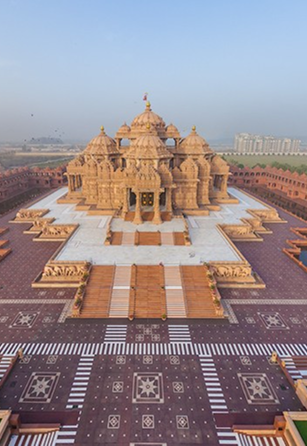
In India, music was never entertainment. It is a science of consciousness — each raga a doorway, each rhythm a map of time. The forts and palaces are the body of India. The music is its soul.
The journey rises like a melody — Delhi, Agra, Jaipur — until, in Jodhpur, the masters are sitting beside you rather than on a stage in front of you. And some evenings there is no stage at all: tents in the Thar, lamplight, wind — the India nobody talks about.
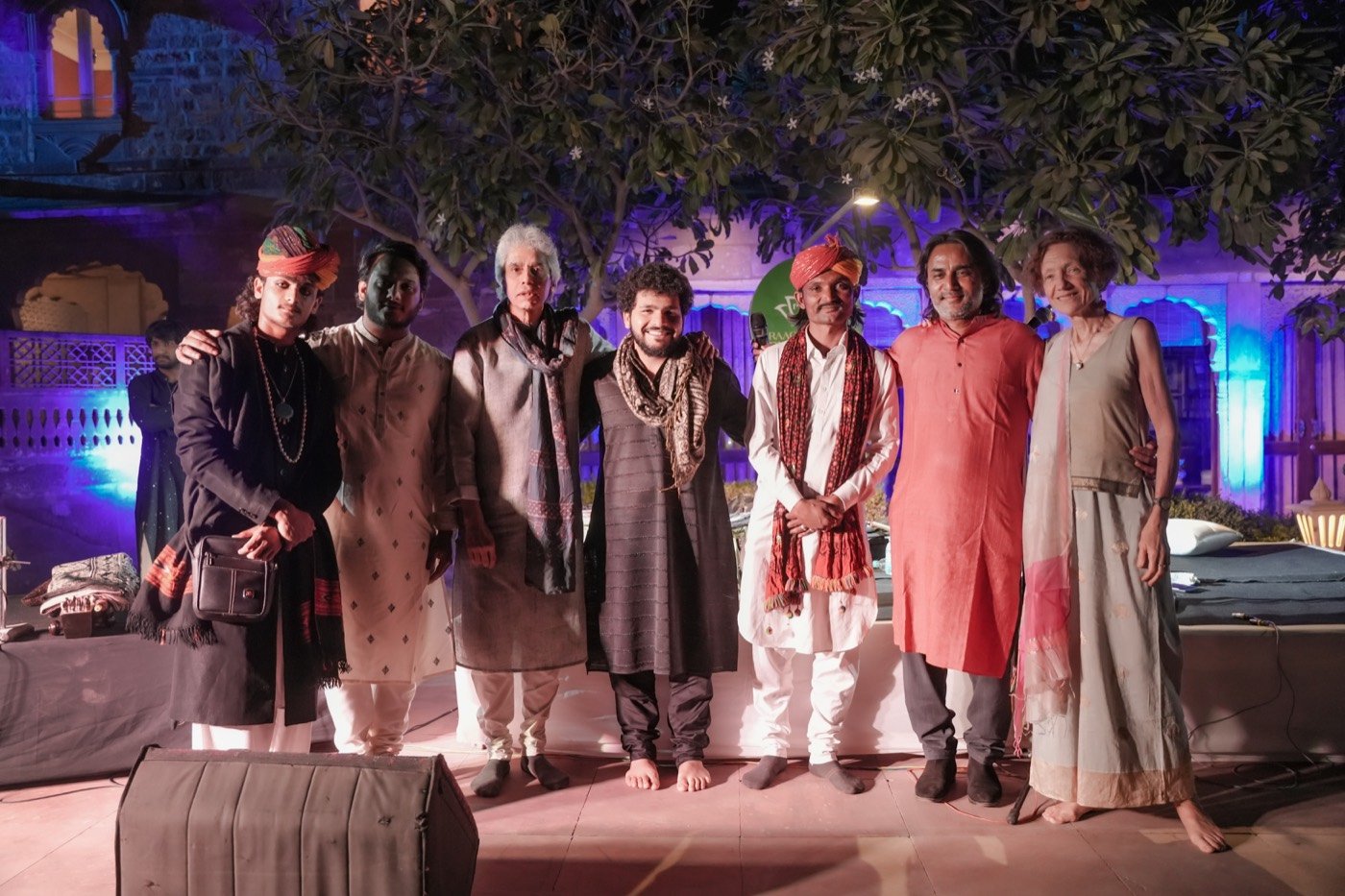
The masters of the journey — one evening, one lineage

Nāda Brahma, say the oldest texts — the universe itself is vibration. Out of Vedic chant, three thousand years ago, grew the raga system: architectures of sound, each assigned its hour, its season, its exact emotion. A technology of feeling, refined over a hundred generations.
When kings wanted this music preserved, they entrusted it to families — whole households whose inheritance was sound. That is a gharana: literally a “house” of music, born in the royal courts, where a master’s art passed to his disciples ear to ear, generation after generation. Every great city raised its own — Gwalior, Agra, Delhi, Jaipur — schools that still carry the names of the courts that protected them. Emperors kept these musicians the way they kept jewels: legend says Tansen’s Raga Deepak could light the palace lamps by itself. This knowledge cannot be streamed. It can only be sat with. That seat is what this journey gives you.
Every gharana begins the same way — a child, listening
Somewhere between the first tanpura note and the last desert lamp, your thoughts grow quiet. And when thoughts fall silent, only the present remains — and in the present, India gives you back your true self. That is what this journey is for.
Ragas, qawwali, Kathak and the desert night — music that touches what words cannot reach.
Raaga science, the masters’ teachings, three thousand years of knowledge that still makes sense.
Nāda Yoga at dawn, breath, Ayurveda, dance — days your body will thank you for.
The dimension no itinerary sells: presence. When thoughts stop, you begin.
I
Where the journey through India’s sound and history begins
II
Dawn at the Taj, and the pink city built on court arts
III
Dedicated time with India’s classical masters, day after day
IV
Tents in the desert, and the people who live inside music
01
The First Voice
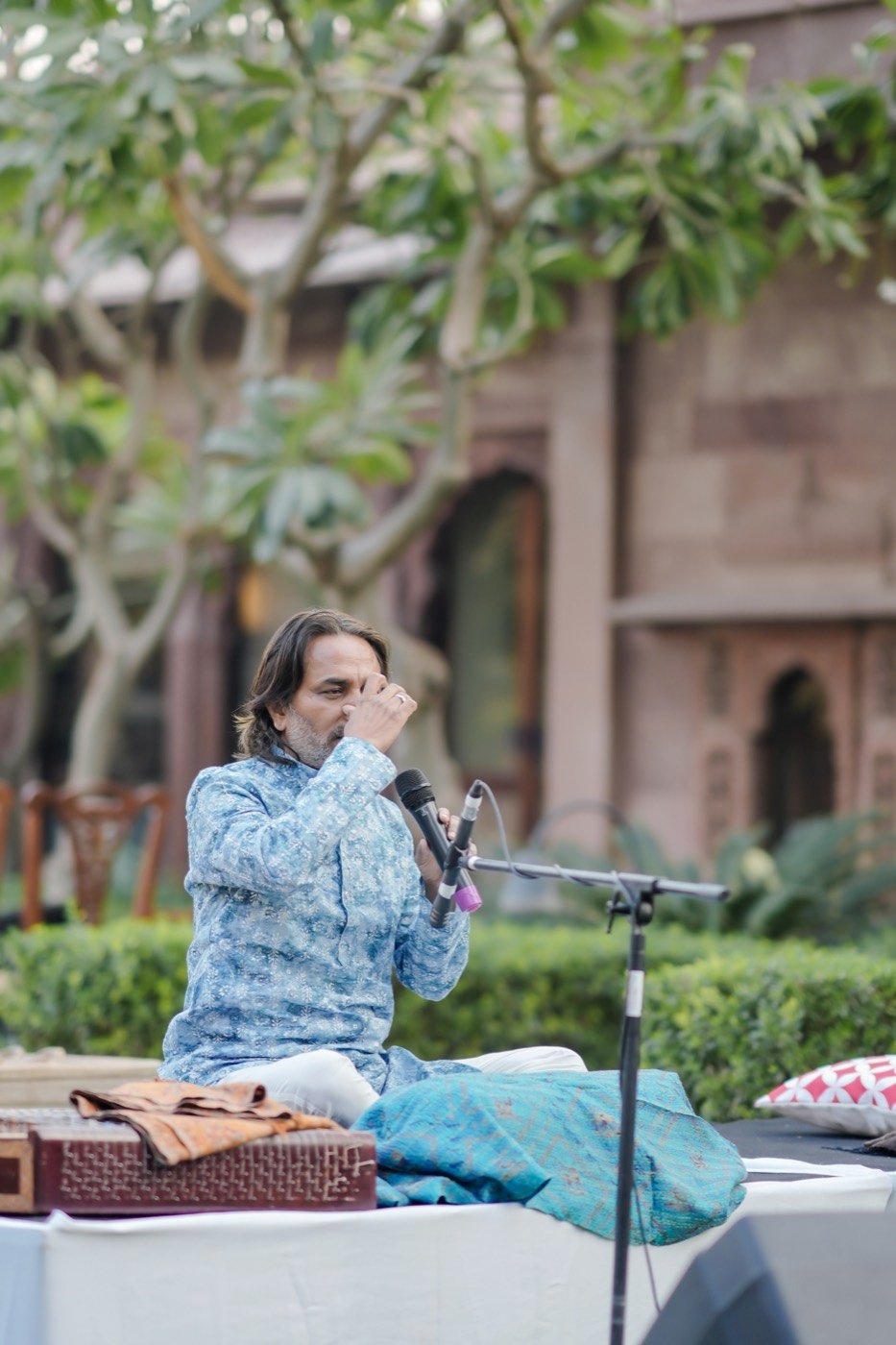
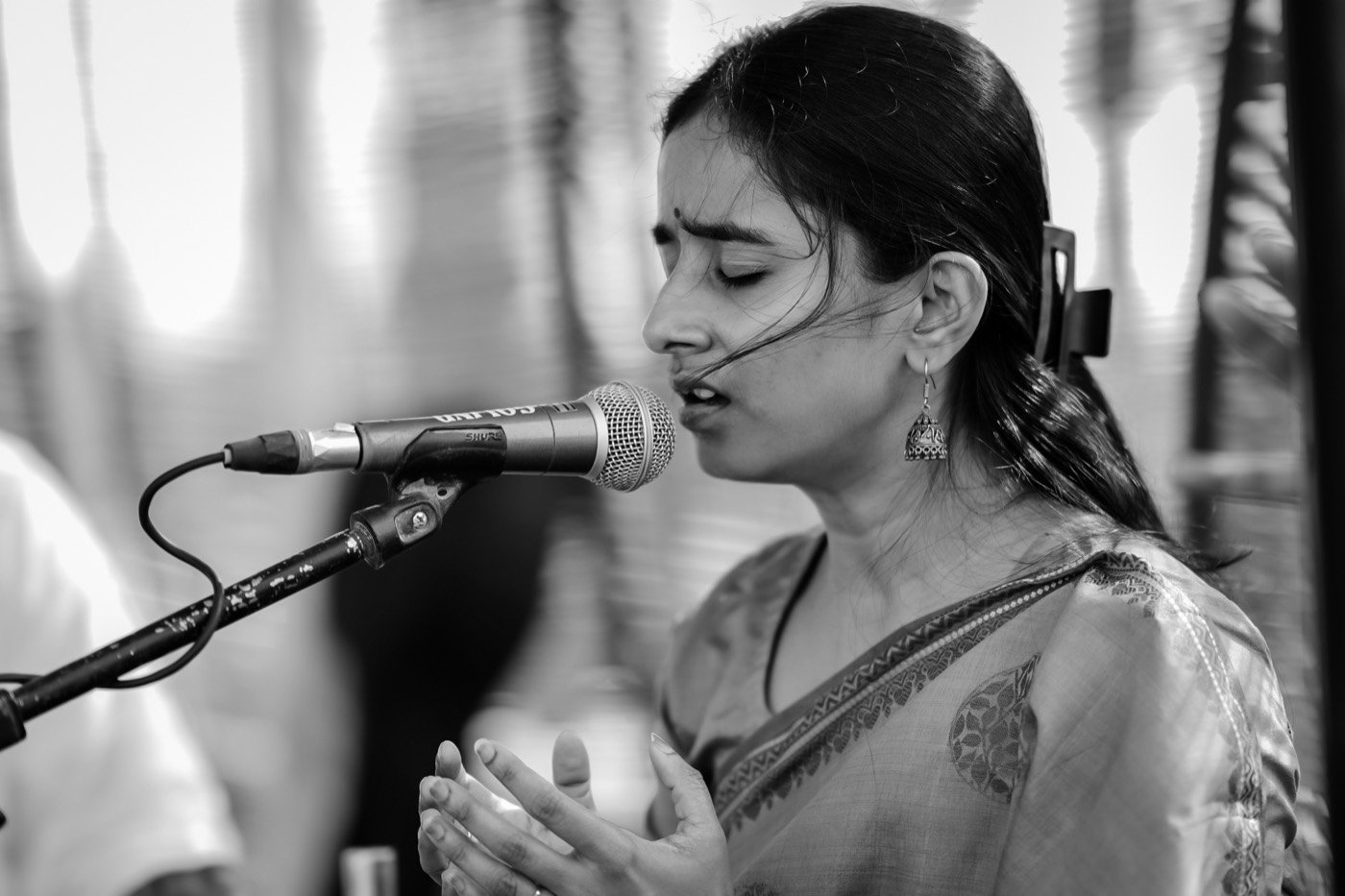
India does not shake your hand. It sings to you. On your very first evening, in a candle-lit courtyard of old Delhi, you attend your first baithak — an intimate gathering where a single voice rises over the tanpura, the way Delhi’s courtyards have hosted music for seven hundred years. In the city of the great dargahs, where Sufi qawwali has never once stopped, you receive the journey’s first teaching: how to listen. Everything that follows asks nothing more of you than that.
02
Frozen Music at Dawn
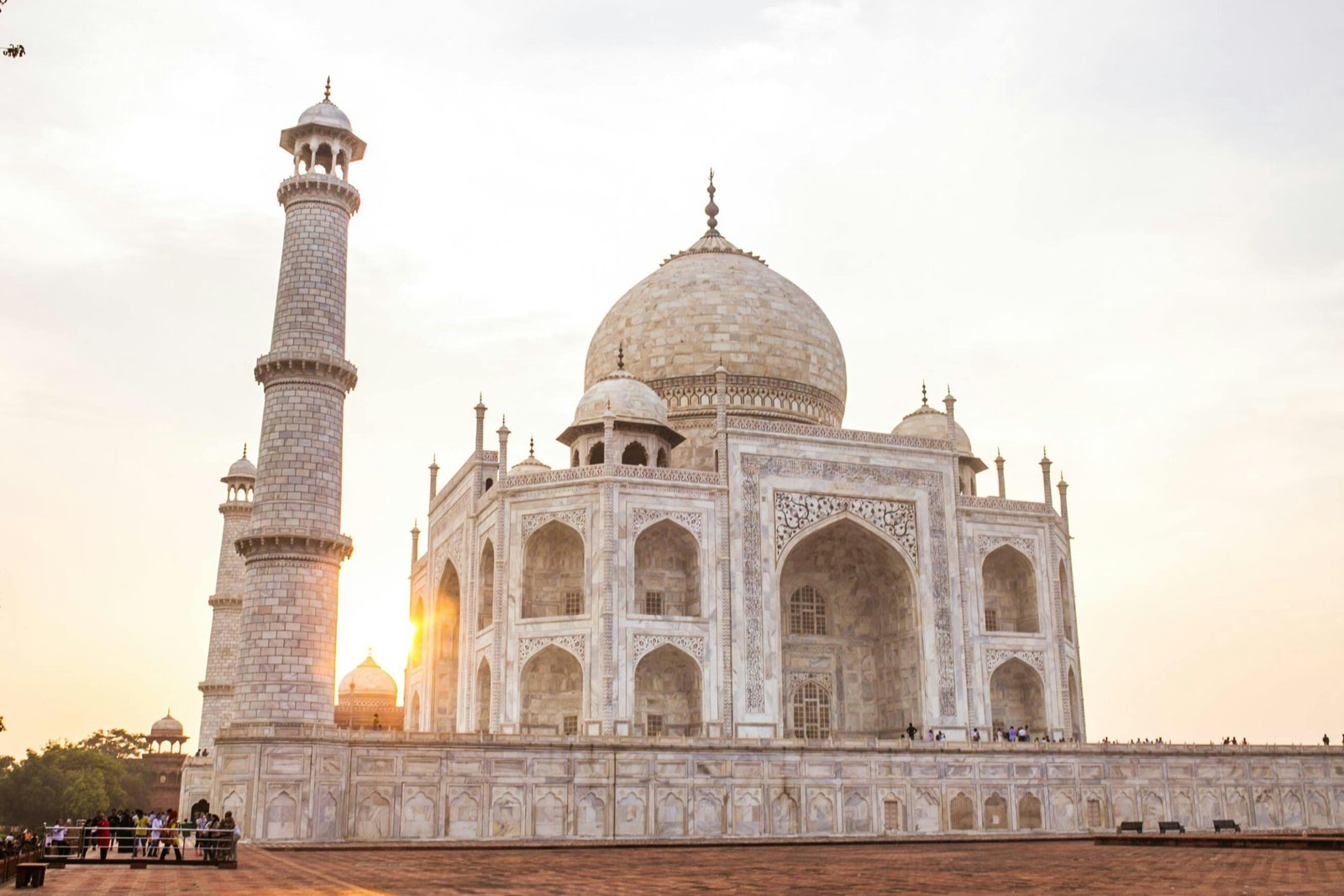
Agra is not only the Taj — it is a gharana: the city gave its name to one of the greatest lineages of Indian classical singing, famous for voices of astonishing power. At dawn, before the world arrives, you stand before the Taj Mahal and understand why architecture is called frozen music — mathematics turned to marble, grief turned to harmony. That evening, a mehfil in the gharana’s own city: the music the monument was built from, sung into the night air.
03
Where Kathak Learned to Spin
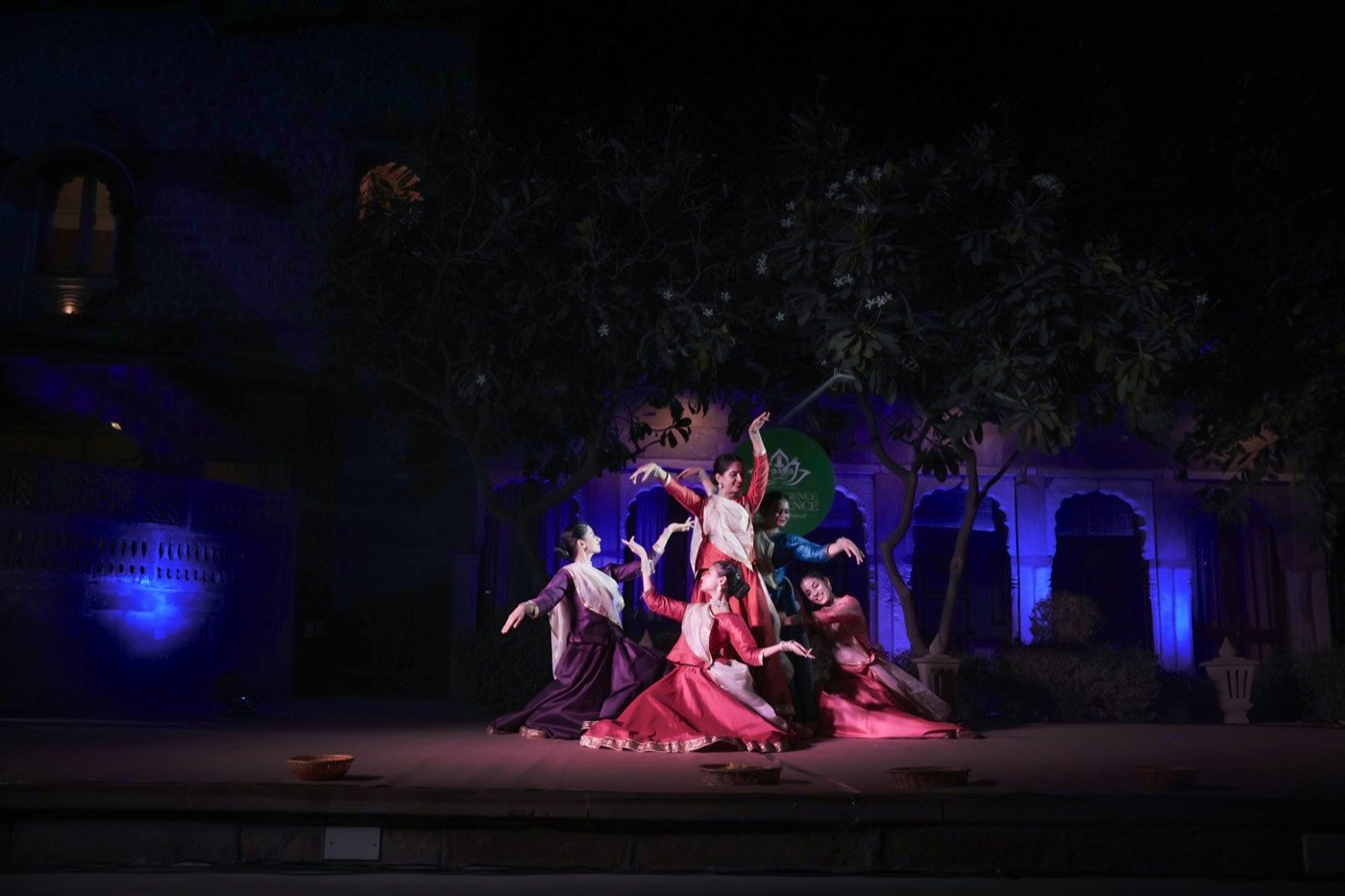
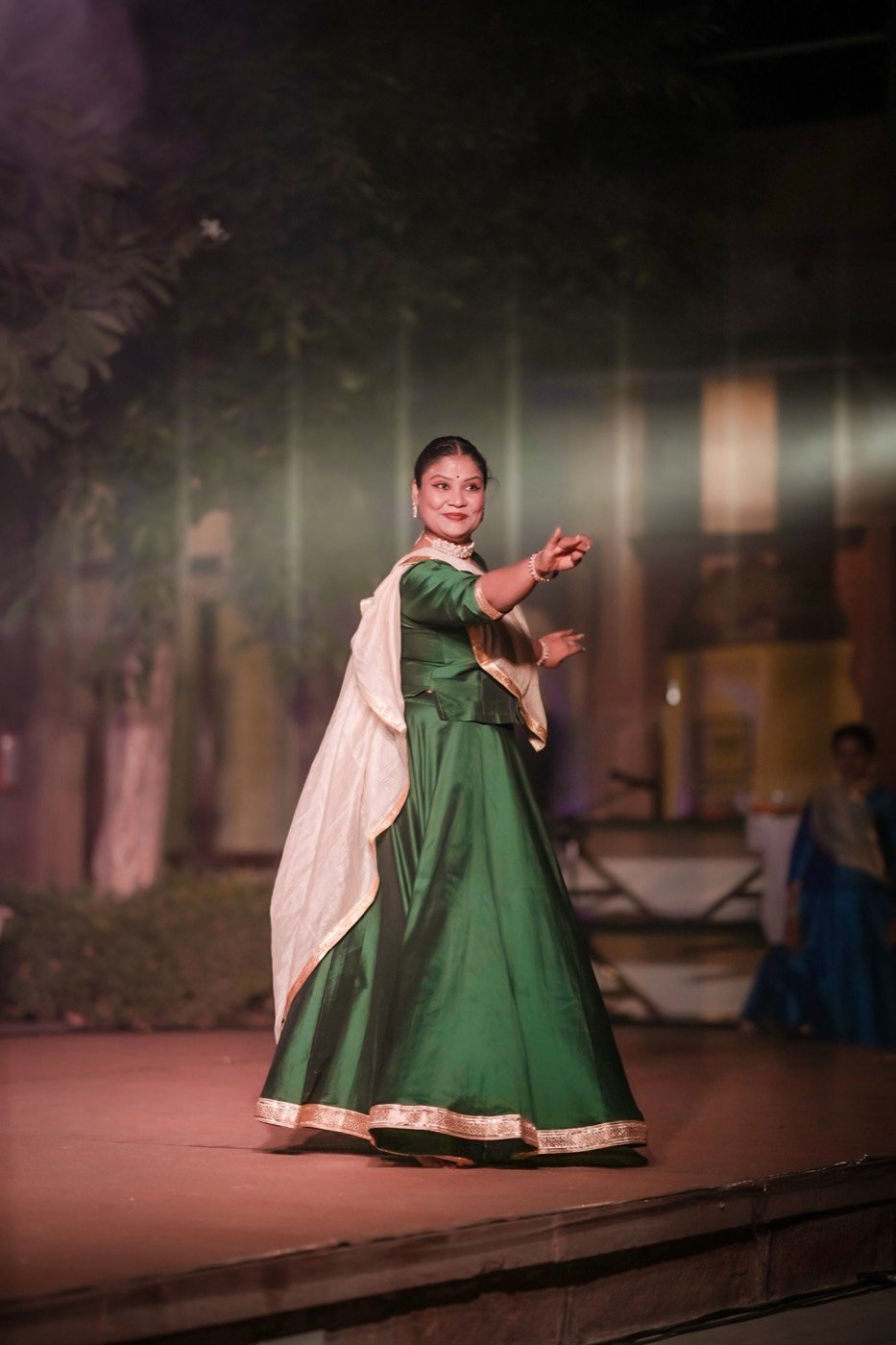
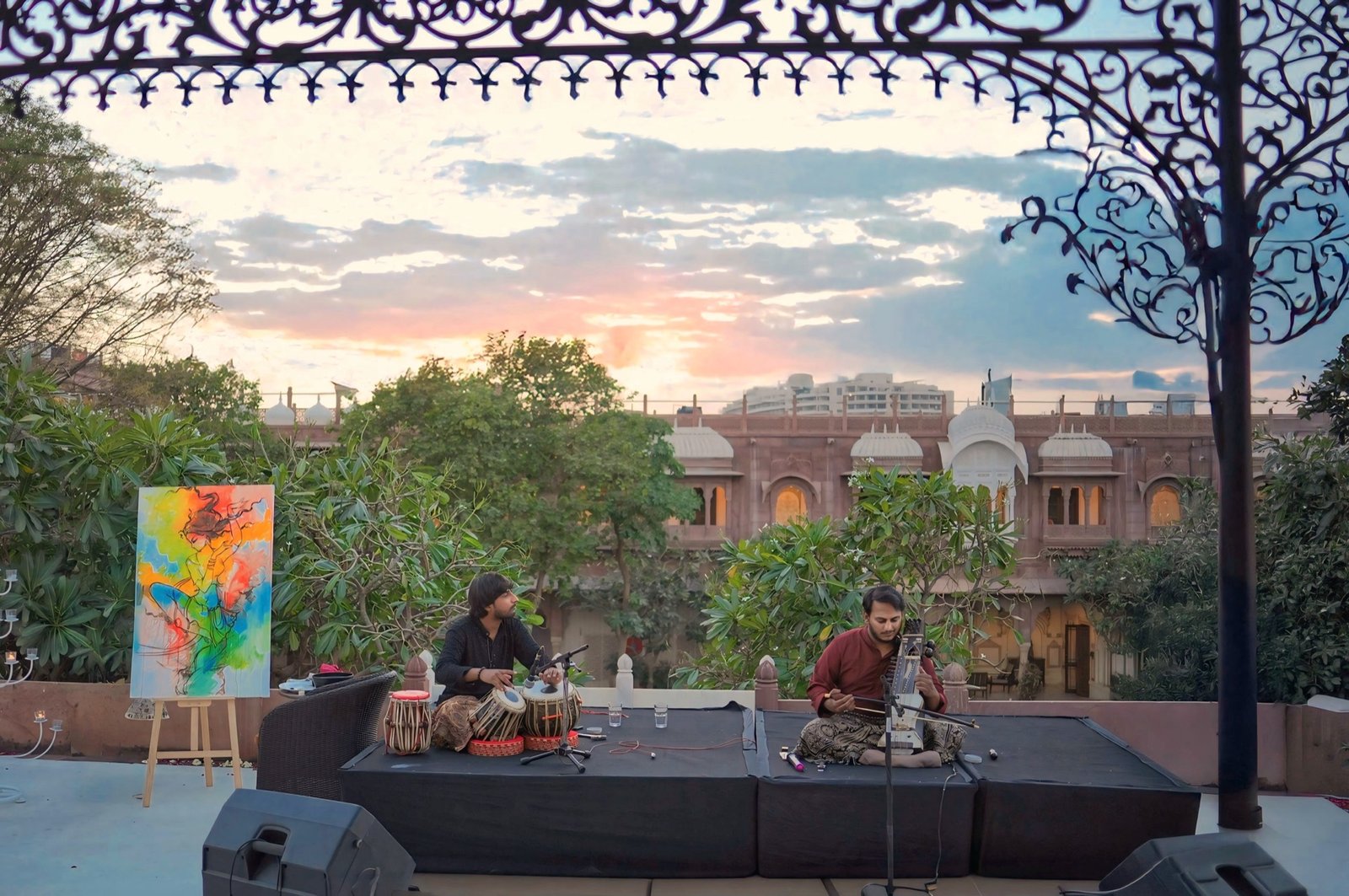
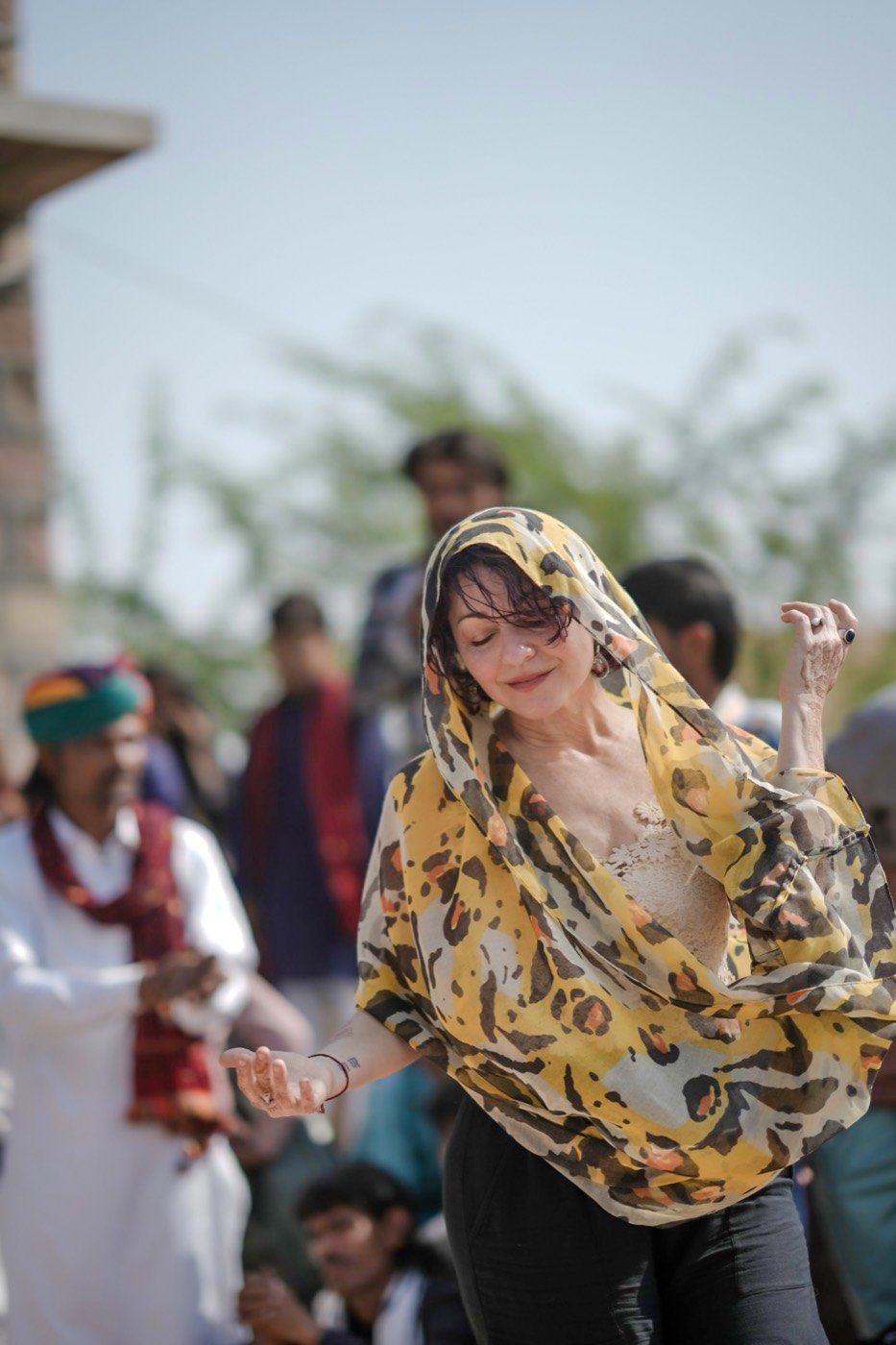
The pink city was built by a king who measured the heavens — and in his courts, astronomy, geometry, music and dance lived as one body of knowledge. It is here that the Jaipur gharana of Kathak refined its lightning footwork and endless pirouettes. Your evening: Kathak under the stars in a palace courtyard — ankle-bells answering the tabla, silk spinning in torchlight — danced for your circle alone. In India, science and art were never two different things. That is exactly what Raaga Science means.
04
Dawn, Breath & Sound
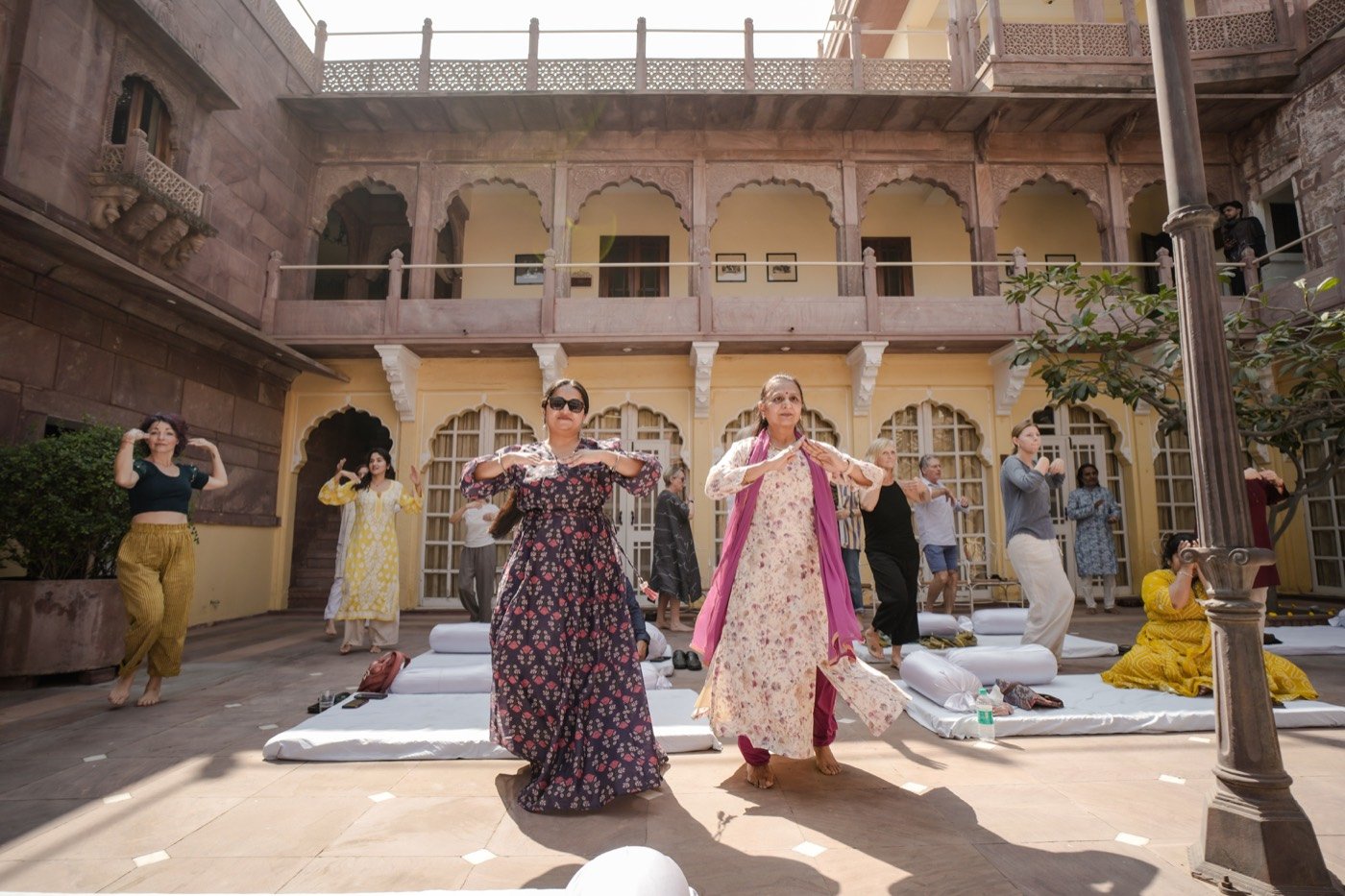
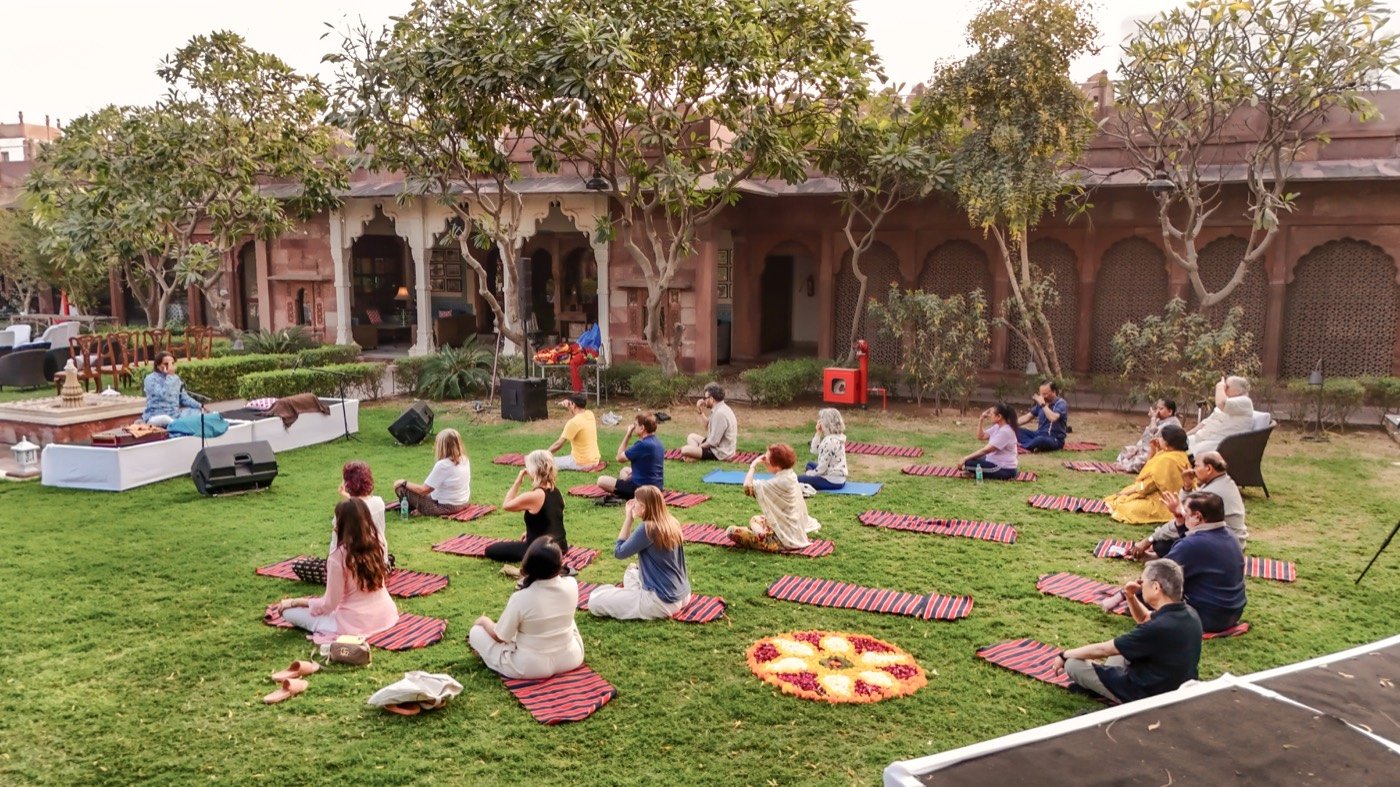
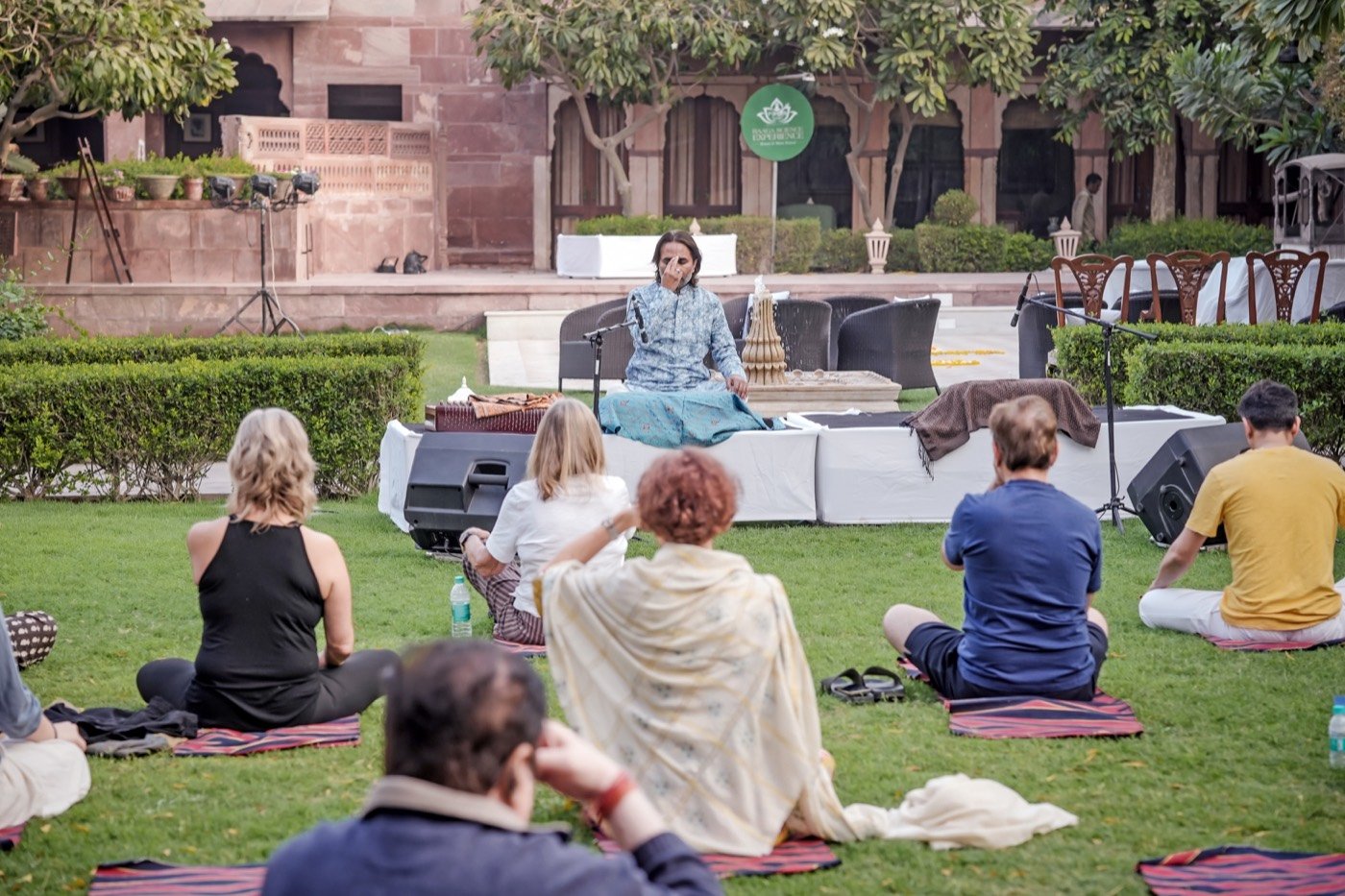
In Jodhpur the journey deepens into practice. Every morning begins in the gardens of a heritage palace beneath the Blue City: Nāda Yoga — the yoga of sound — breath, vibration and guided sound meditation as the light arrives. The tuning of the listener, every single day, before the masters begin.
05
Dedicated Time With Each
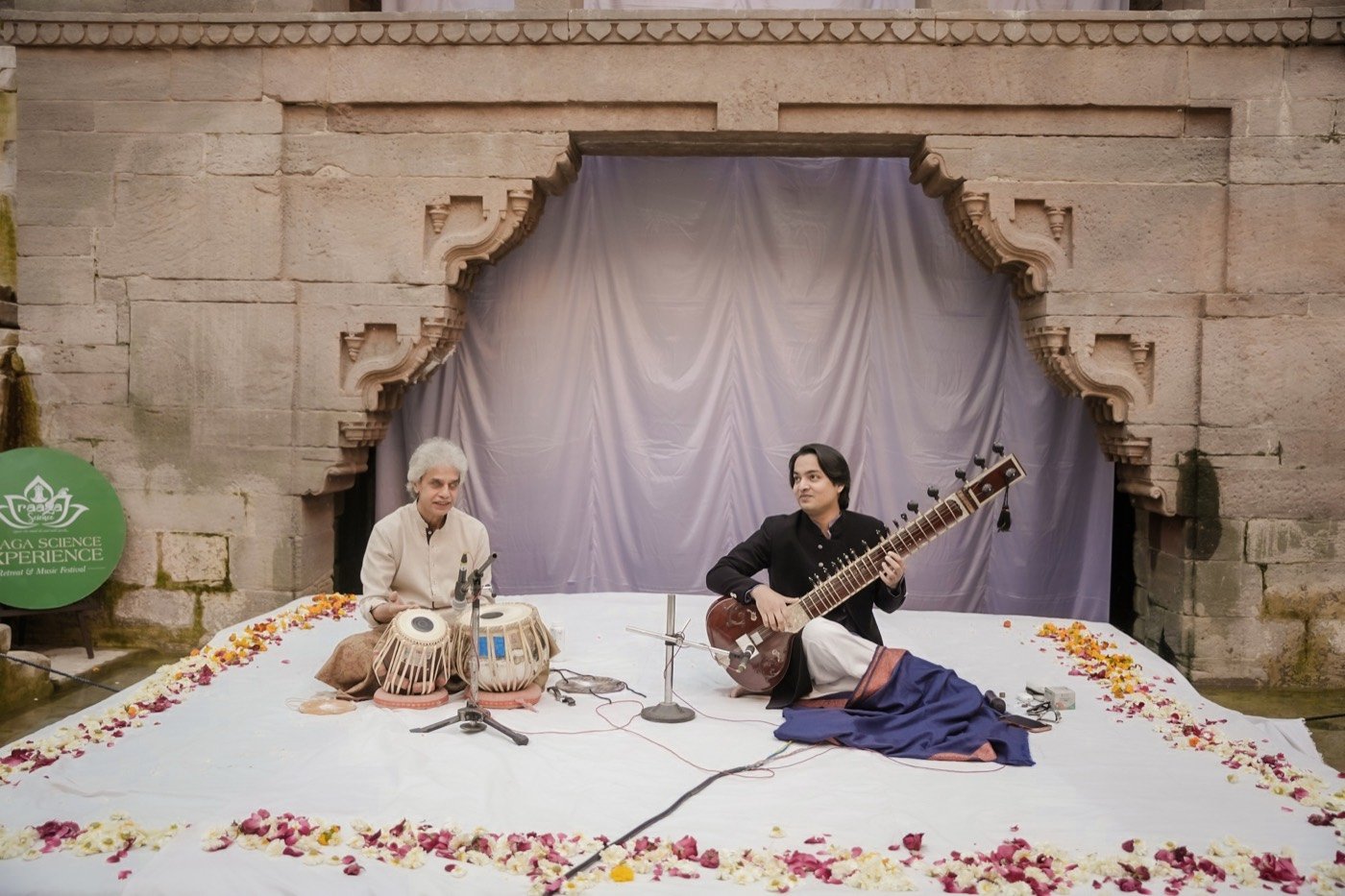
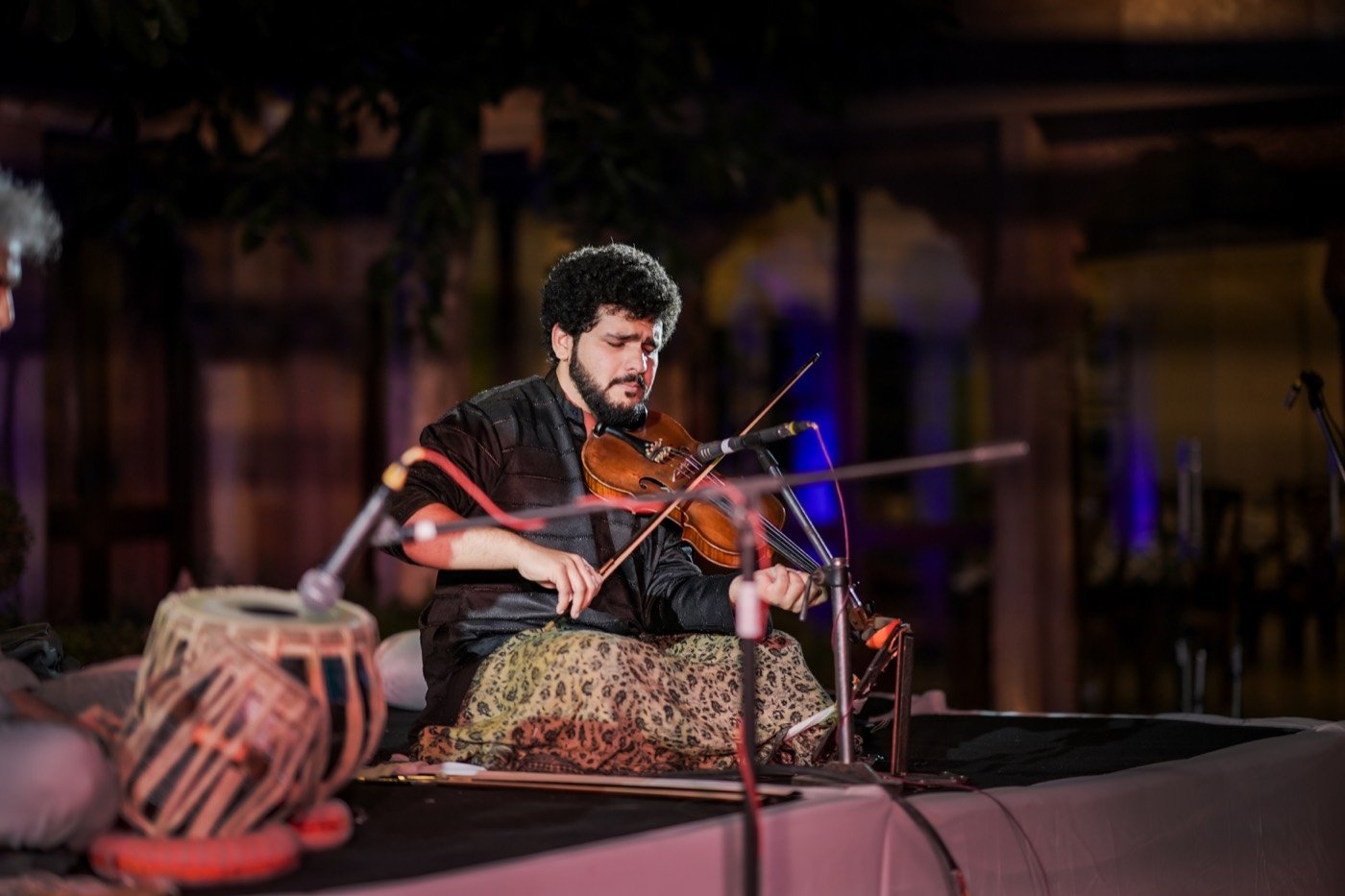
This is the heart of the journey, and it exists nowhere else: India’s classical masters, drawn from many gharanas — the great houses of Indian music — each taking you on their own journey, with dedicated personal time. Raga by raga, rhythm by rhythm, instrument by instrument — the way disciples have learned for five hundred years. Not concerts you attend; apprenticeships in miniature. Alongside: Raaga science sessions where tradition meets neuroscience, Kathak with performing masters, and Ayurveda woven through the days.
06
A Concert Carved Into the Earth
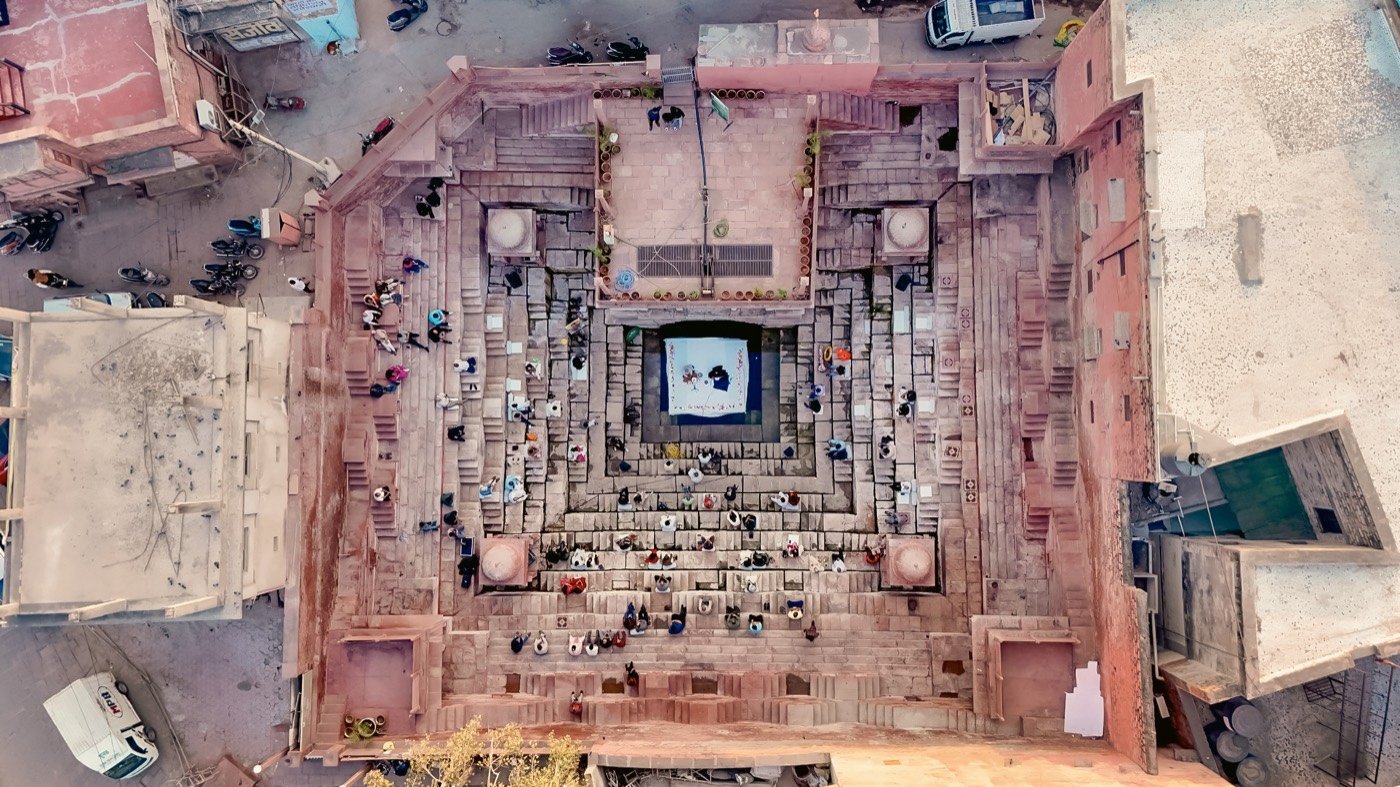
One evening belongs to a setting no opera house on Earth can rival: a centuries-old stepwell, its staircases descending into the earth, listeners seated on every level of the stone, the music rising up through them like water once did. The stone holds the sound, deepens it, returns it. Seen from above, the audience becomes part of the architecture. This single evening is why photographs of this journey stop people mid-scroll.
07
Thirty Generations of Music
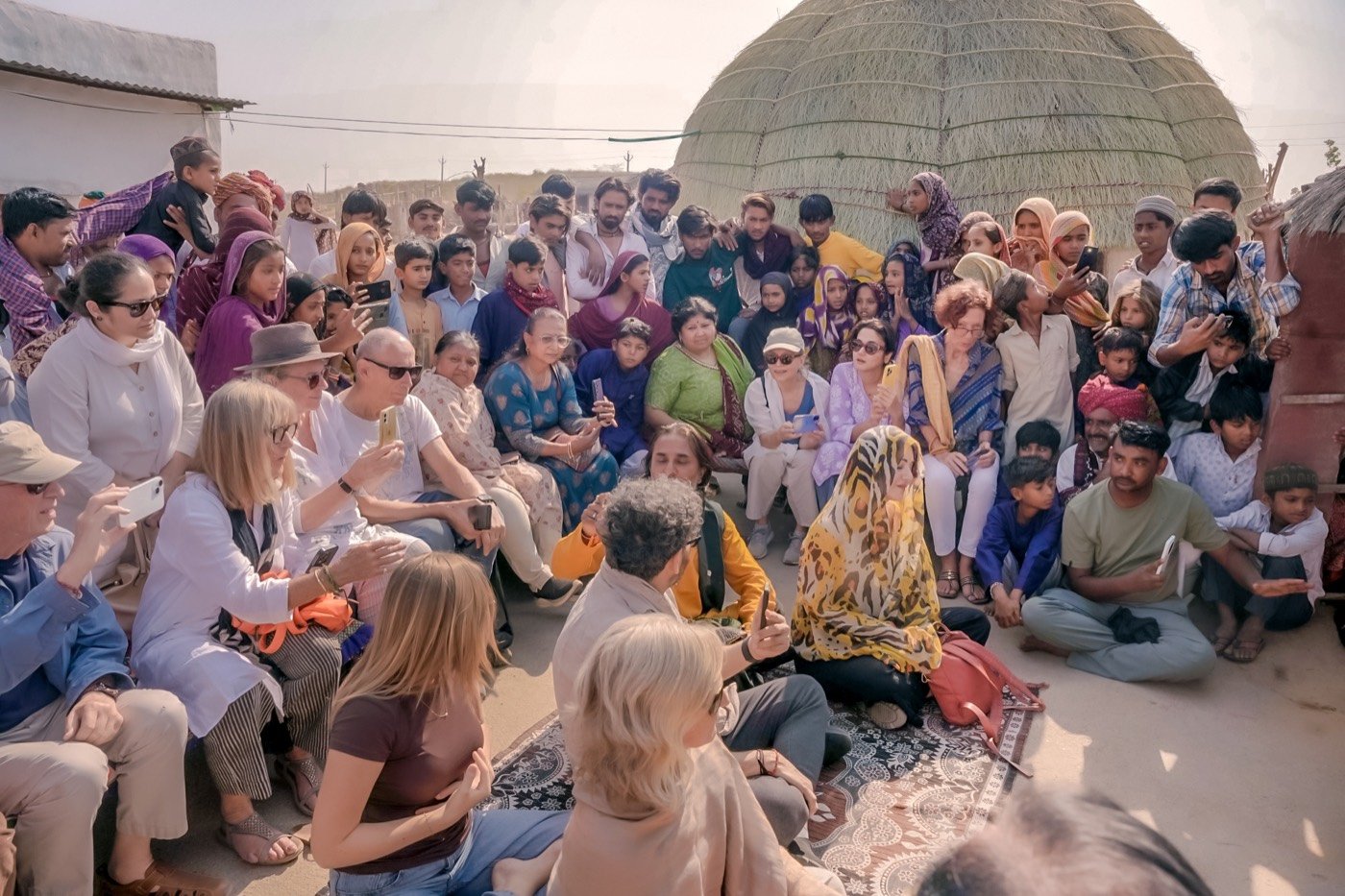
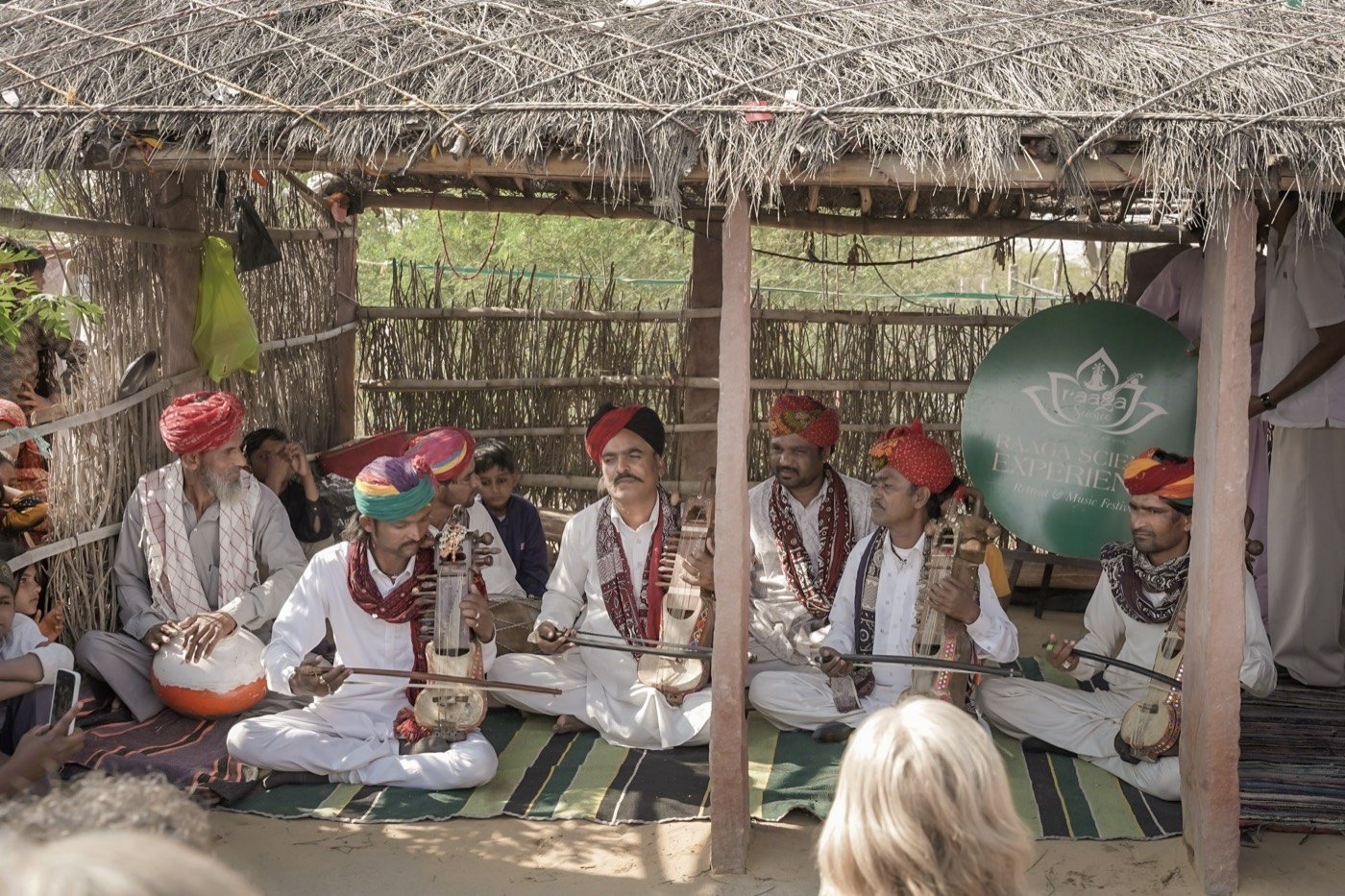
Deep in the Thar lies a village where music is not a profession — it is the bloodline. Every family, hereditary musicians; every child raised inside rhythm the way others are raised inside language. The whole village gathers to receive you: the kamaycha players in their red turbans, the women’s songs, the children keeping time with wooden khartals. You sit among them — not an audience, a guest — and understand that what the palaces refined, the desert has simply lived, for thirty generations.
08
Under the Moon, By Lamplight
And then the night the journey was built around. Tents in the open desert. Lamps flickering in the sand, the moon over the dunes, and no other sound in the world but the wind — until a single voice rises out of the darkness, and the musicians answer, and the night becomes music. No stage. No programme. No walls between artist and listener, between India and you. People do not describe this evening afterwards. They go quiet when they try. This is the core of India no one talks about — and it changes people.
09
One Last Raga
The journey resolves the way a raga does — returning home transformed. A final day of reflection and celebration: the masters, dancers and healers of the whole journey gathered under the night sky for one closing performance — classical and folk, Kathak and Sufi, every day of sound resolving into a single evening. You came to India to see it. You leave having heard it — and having heard something of yourself.
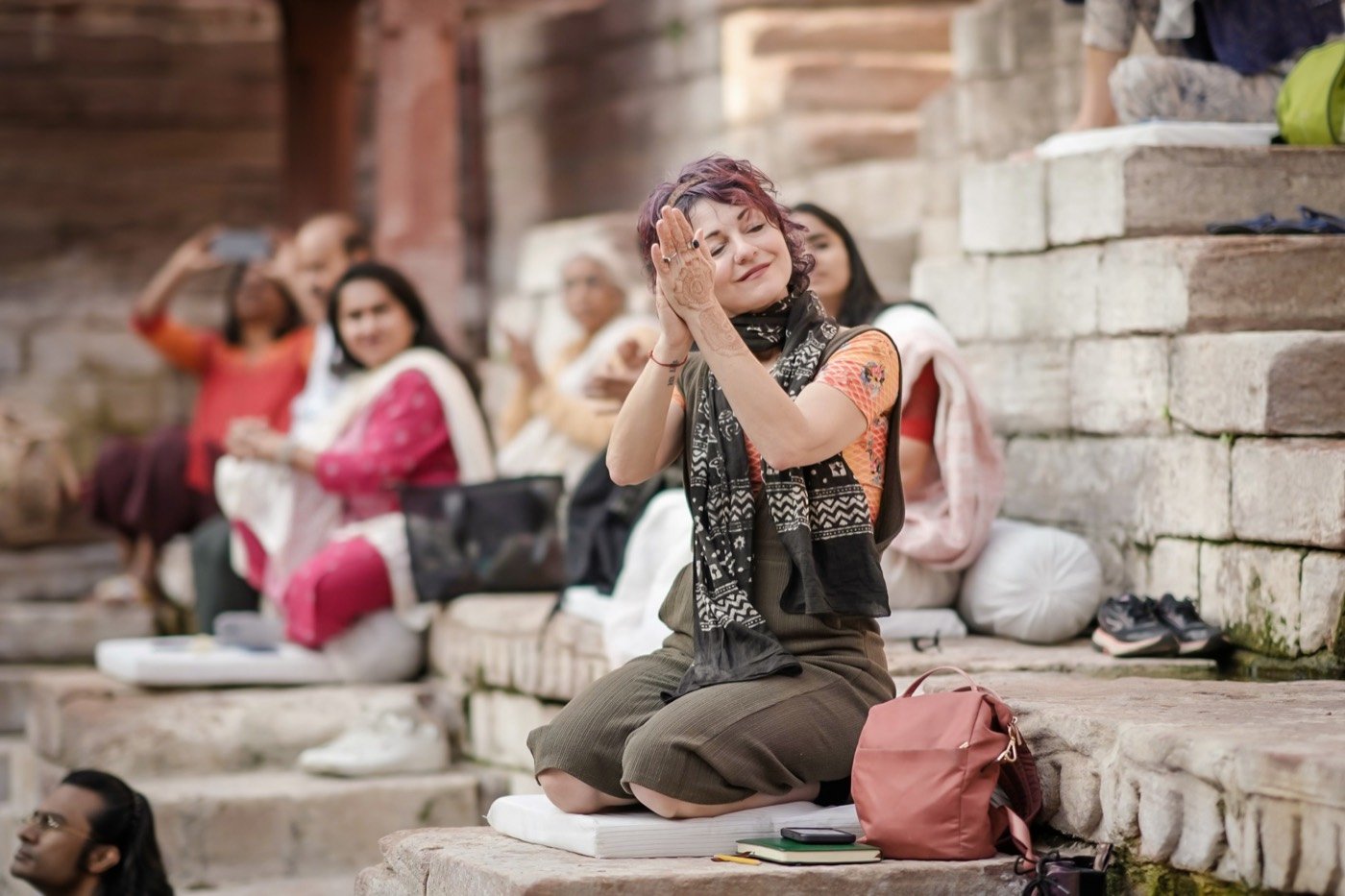
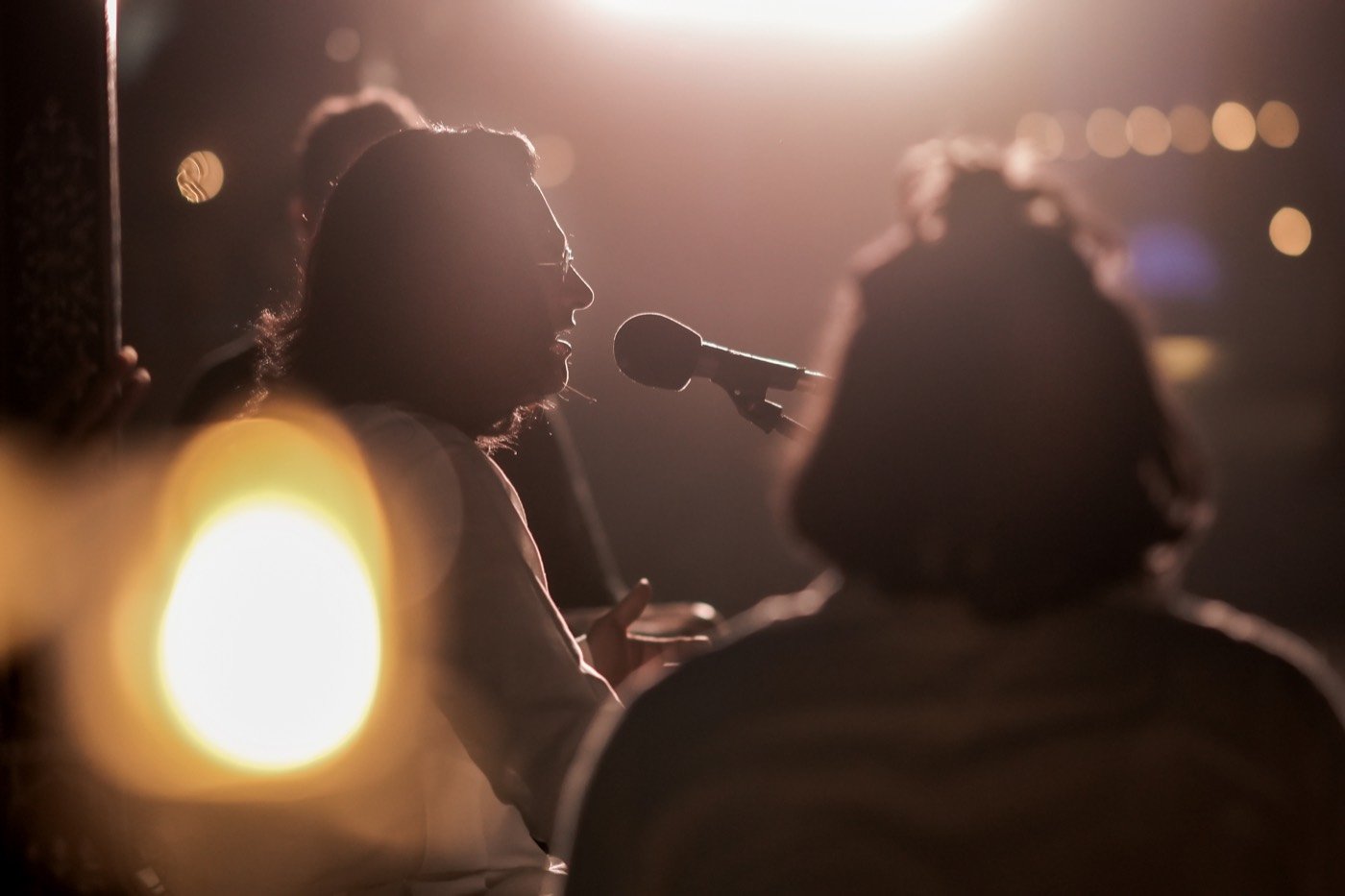
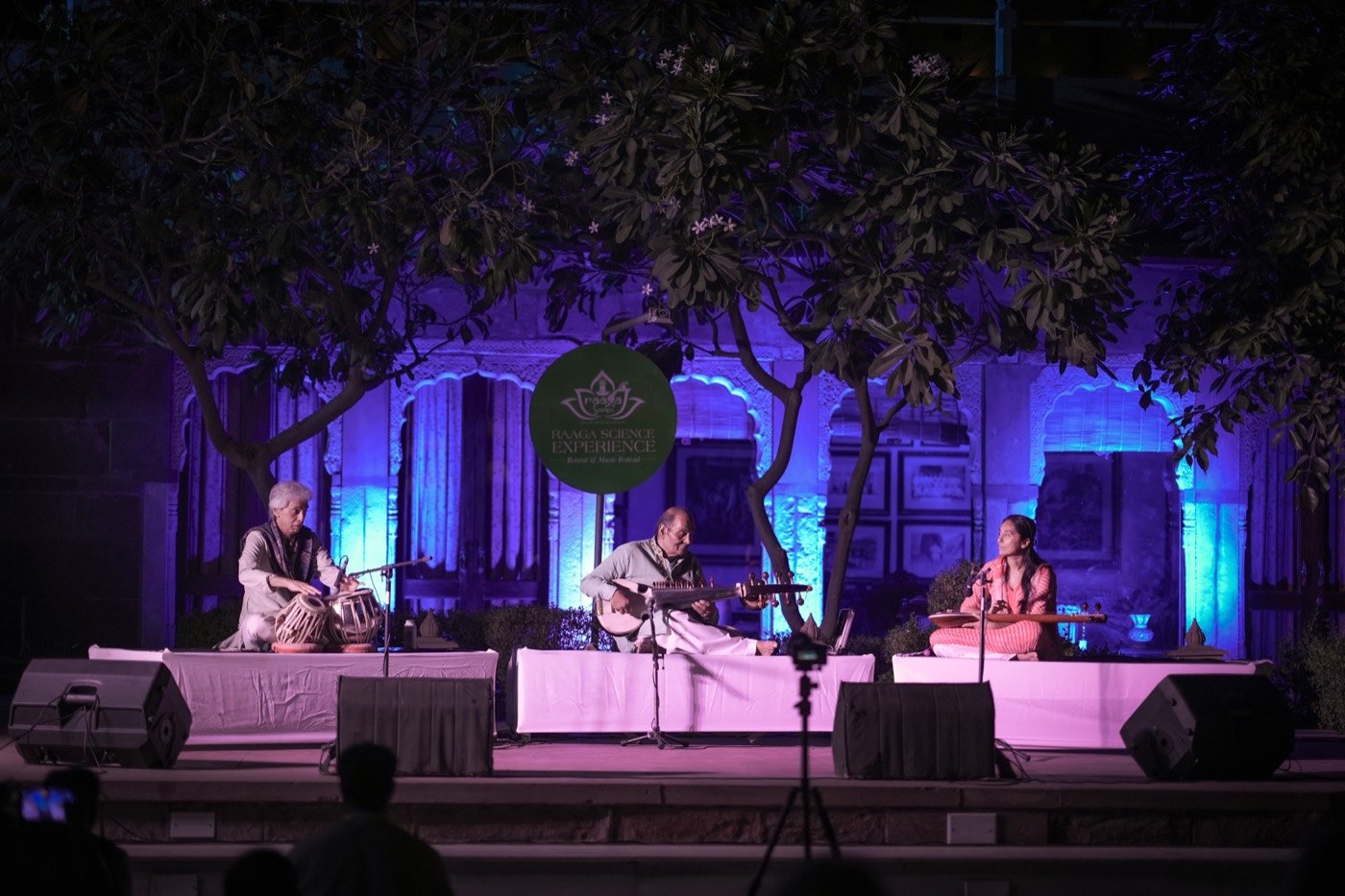
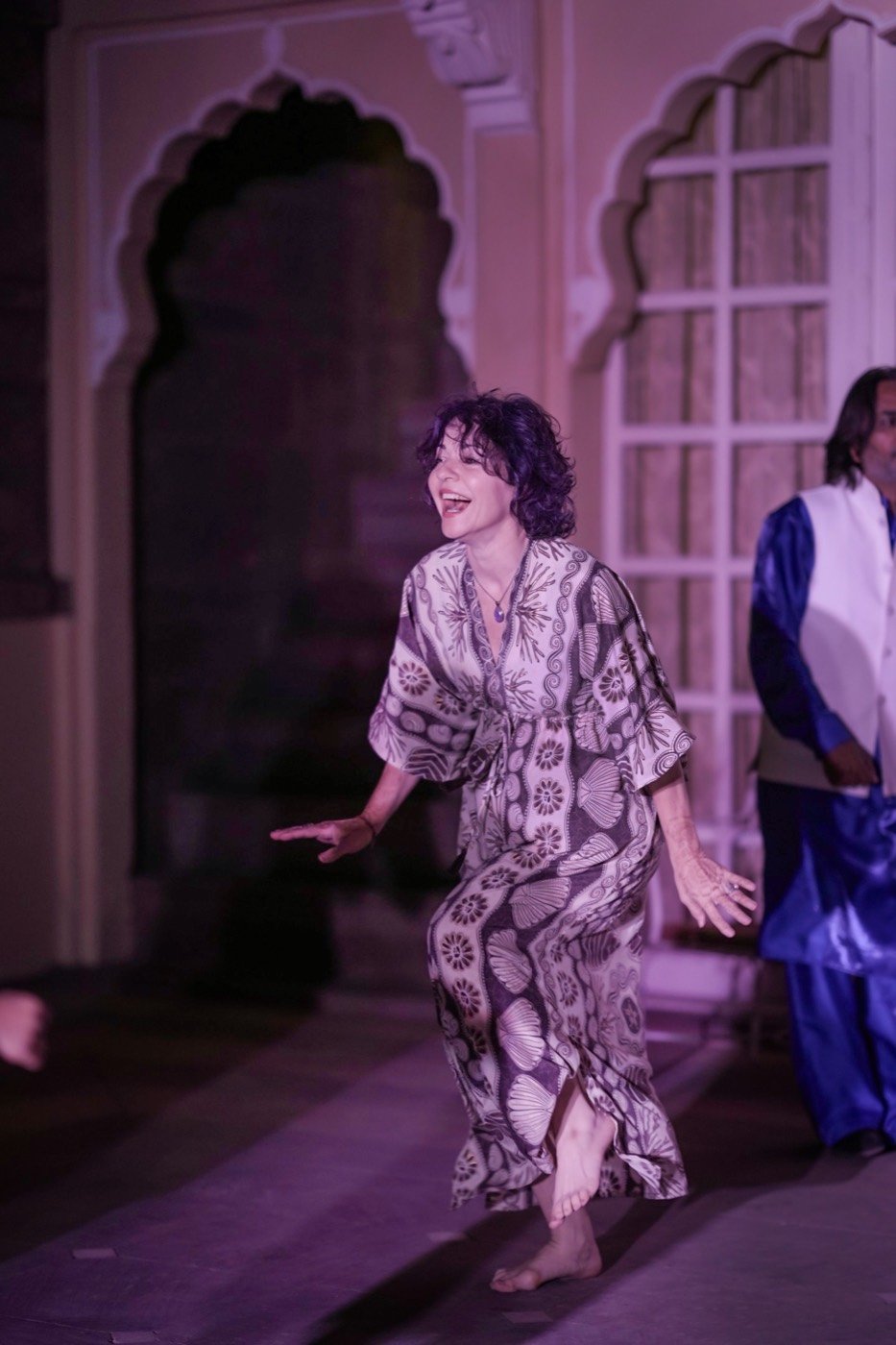
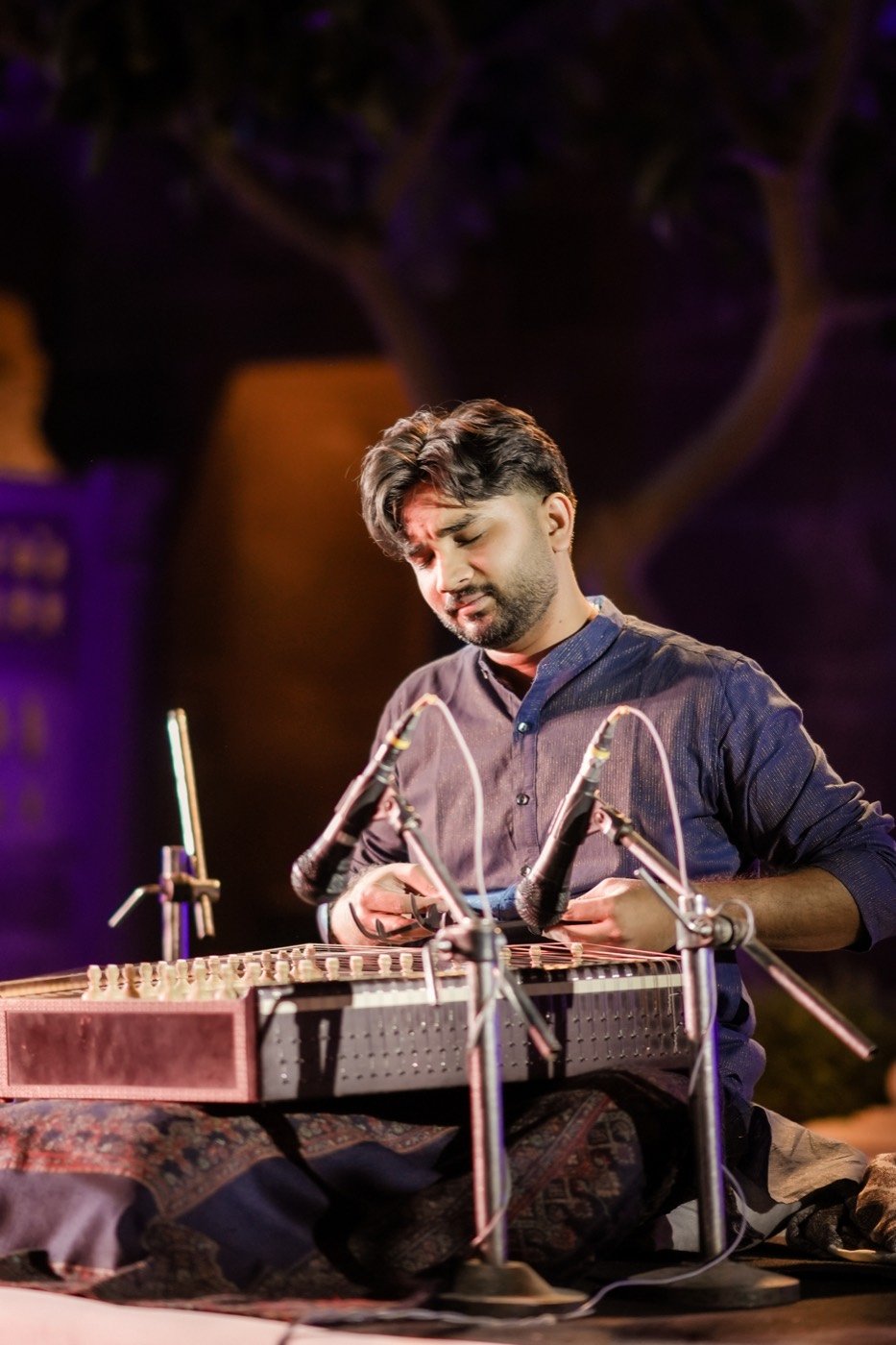
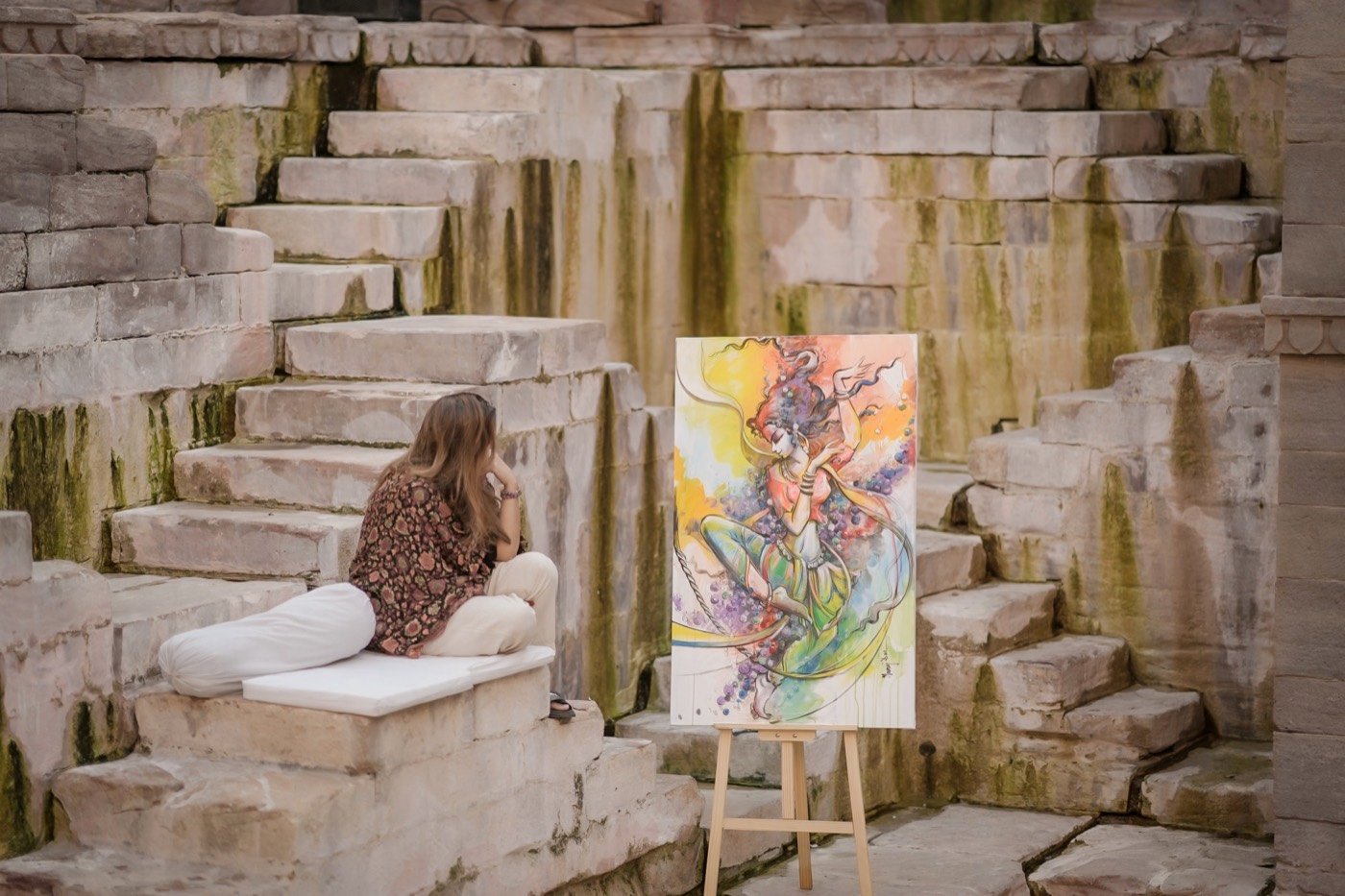
Not staged. Not stock. These are real hours from the experience — kept exactly as they happened.
Raaga Science explores the relationship between India’s traditional musical wisdom and contemporary understanding of sound, attention, emotion and the nervous system. It does not present music as a medical cure. It creates an evidence-informed, experiential environment where structured music, breath, listening, rhythm and meditation can be explored for what they may offer — relaxation, attention, emotional depth, wellbeing. Tradition and science, side by side, experienced first-hand.
Heritage palaces in the cities · private tented camp in the Thar
Places are limited and allocated personally. Tell us who you are, and we’ll take care of everything — including weaving the journey into a longer India experience if you wish.